

What’s a Penjamin?
In recent years, stealthy THC vapes have taken on new forms. No longer just sleek metal sticks, they now appear as writing pens, car keys and lip‑balm tubes. These highly camouflaged devices are known in vaping culture as Penjamins.
The name is a playful fusion of pen and Benjamin—the latter slang for something valuable or high quality. It reflects both the pen‑like appearance and the premium materials often used in these high‑end stealth vapes.
By blending everyday aesthetics with advanced vapor technology, penjamins let users enjoy cannabis oil discreetly in settings where a traditional vape might draw unwanted attention. Social‑media influencers have helped popularize them by demonstrating how convincingly these devices mimic ordinary objects.

The Market Context: Cannabis Vaping’s Explosive Growth
The rise of penjamins isn’t happening in isolation—it’s part of a massive expansion in cannabis vaping globally. The cannabis vaporizer market was worth approximately $5 billion in 2023 and is projected to reach $17.11 billion by 2032, growing at a compound annual growth rate of 14.53%. This explosive growth is driven by increasing legalization, consumer preference for discreet consumption methods, and technological innovation in vaping devices.
Portable vaporizers—which include penjamins—captured nearly 70% of the market in 2023, largely due to their portability, ease of use, and discreet design. Battery-powered devices dominate this space, representing almost 65% of the market thanks to their reliability, variable temperature settings, and rechargeable capabilities.

It’s hard not to feel a mix of admiration and frustration when looking at this trend. On one hand, there’s real artistry in designing a vape that can pass as a lip balm or car key. On the other, this very creativity underscores how restrictive cannabis policies are. In countries like Australia, recreational cannabis remains illegal and recent vaping reforms outlaw the sale of disposable devices such as penjamins, yet there is still a robust illicit market.
Without such prohibitions, many of these high‑tech disguises would be unnecessary; users wouldn’t need to cloak their consumption in layers of subterfuge simply to avoid punishment or stigma.
Origins and Invention: Where Did Penjamins Come From?
The story behind penjamins has two threads: slang and hardware design. The slang term “penjamin” combines pen (as in vape pen) with Benjamin (a hundred‑dollar bill) and has become a playful code word within the cannabis community.
According to the Hemp Doctor, the phrase seems to have been popularized by YouTuber and streamer Fulcrum in 2022, but the website notes that it was already in circulation and that “it isn’t entirely clear when the word was first used or who originally coined it“. The article explains that pen refers to a vape pen and Benjamin denotes something valuable or cool, reflecting the high quality of these stealth devices.
Outside of modern marketing, internet researchers have traced the earliest known use of the word “penjamin” to a September 2, 2019 post on X (formerly Twitter) by user @youngfishgod.
The Know Your Meme entry on the slang notes that the term was added to Urban Dictionary in January 2021 and that its popularity surged after Fulcrum repeatedly used it in October 2022 videos. In other words, the word emerged organically through social media before companies adopted it as a product name.
While the slang was brewing online, inventive engineers were quietly turning the idea of a vape disguised as a pen into reality. A notable example is the VaePlume, profiled by Denver Westword in 2017. Engineer and machinist Jake Plume developed a vape pen that is also a functional writing instrument.
He explained that he was inspired after seeing vape pens disguised as pens that didn’t work well and spent about six months tinkering with batteries and airflow to fit a cartridge into a normal pen body. Plume sourced compact batteries, designed a hidden vent hole under the pen clip for airflow, and even drew on a decades‑old idea of hiding a pipe inside a Sharpie marker.
The result was a device where users unscrew the top, insert a cartridge, and smoke from the top while the bottom still writes—essentially a penjamin before the term became mainstream.
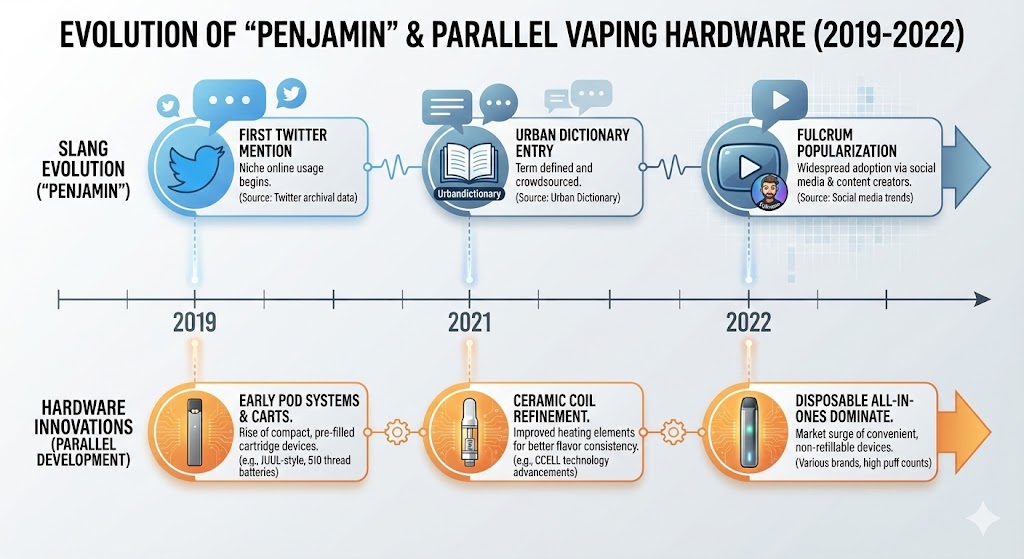
This timeline shows that no single person “invented” penjamins. The term arose from online slang and was later popularized by influencers, while the hardware evolved from the ingenuity of makers like Jake Plume and companies such as Smyle Labs (which now sells an official Penjamin™ Cart Pen). Including this context highlights how cannabis culture, social media and engineering all contributed to the phenomenon.
Design and Features: Discretion Meets Innovation
Penjamins are engineered to look and feel like familiar items while housing a high‑performance cartridge battery. They cater to people who prioritize both discretion and functionality. Key features include:
Ultra‑discreet design: Many models are shaped like real pens, key fobs, or lip balm tubes. These form factors blend into a backpack, purse or pocket without raising eyebrows.
Cartridge compatibility: Most devices support both 1 g and 0.5 g cartridges, letting users choose their preferred oil size.
Smart battery technology: Variable voltage settings, preheat functions and long‑lasting batteries help optimize vapor production.
Premium materials: Manufacturers build penjamins with durable materials for a refined look and feel.
These characteristics set penjamins apart from off‑the‑shelf vape pens and align them with the slang meaning of Benjamin—a nod to quality and value.
Examples of Popular Penjamin Models
The market for discreet THC devices is evolving quickly, and several models stand out:
Smyle Labs Penjamin Cart Pen: This clever design looks like a writing pen but contains a high‑performance vapor battery. It doubles as an aromatherapy pen, making it the archetype of a stealthy yet functional device.
Car Key Penjamin: Disguised as a car key, this model enhances portability and blends naturally into pockets or keychains.
Lip Balm Penjamin: Perhaps the stealthiest option, this vape mimics a lip‑balm tube. It can sit unnoticed in a makeup bag or desk drawer until needed.
Raygun Penjamin: For users who appreciate playful design, this model resembles a tiny raygun. It shows that penjamins can be whimsical as well as discreet.
Smyle Labs and other makers offer these devices online, and retailers like Mind Vapes provide detailed specs and ordering information.
Adoption and Community
Penjamins appeal to a broad audience. Portability and subtlety make them attractive to experienced vapers who want to avoid stigma, while social media posts drive curiosity among younger users. This fusion of style and performance has led to a growing community of enthusiasts who share tips, unboxing videos and customization ideas.
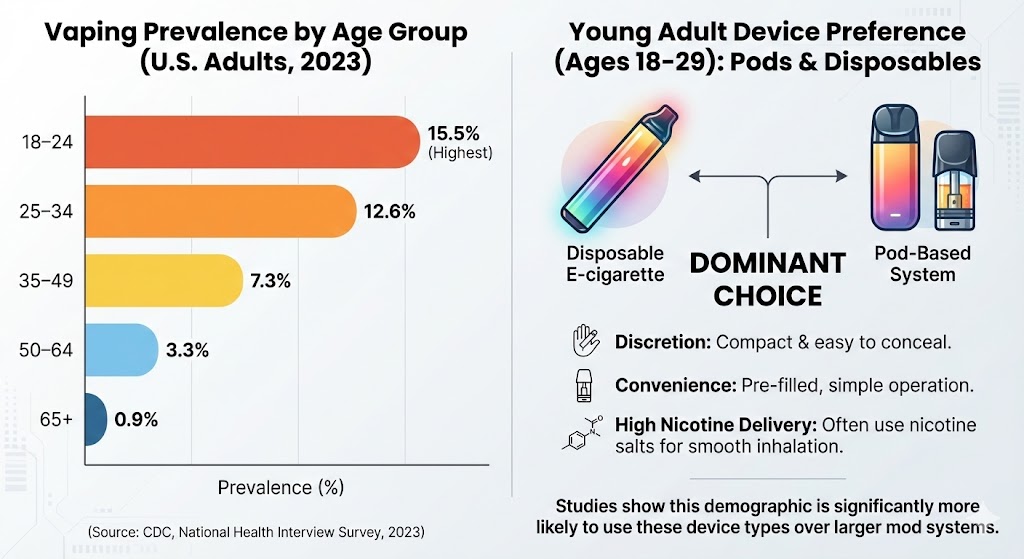
The broader vaping market context helps explain penjamins’ appeal. The global e-cigarette market reached $30 billion in 2024 and is expected to grow to $55.8 billion by 2034. Disposable vapes—which include many penjamin-style devices—account for over half of total product sales, with social media influencers on Instagram, TikTok, and YouTube playing a major role in driving adoption, particularly among younger demographics.
Youth Vaping Concerns: A Cautionary Note
While penjamins are marketed to adults, the broader landscape of youth vaping raises serious concerns that cannot be ignored. In 2024, approximately 1.63 million middle and high school students in the United States reported current e-cigarette use—though this represents a significant decline from 2.13 million in 2023 and over 5 million at the 2019 peak. Among youth who vape, disposable devices are most popular (55.6%), and flavored products dominate with nearly 90% of young users preferring fruit, candy, and dessert flavors.
The ultra-discreet nature of devices like penjamins raises particular concerns about evading detection by parents, teachers, and school administrators. Devices designed to look like writing pens or lip balm can be used in classrooms or other supervised settings without immediate recognition. This has prompted schools to invest in vape detection technology and increased enforcement efforts.
Health officials note that most e-cigarettes contain nicotine, which is highly addictive and can harm brain development through approximately age 25. Among current youth e-cigarette users, over 26% reported daily use in 2024, indicating potentially serious nicotine dependence developing during critical developmental years.
GRAPHIC SUGGESTION 5: Chart showing the dramatic decline in youth e-cigarette use from the 2019 peak (5+ million users / 20% of students) to 2024 (1.63 million / 5.9% of students), with notes on enforcement actions against popular brands like Elf Bar.
What’s Next for Penjamins?
Discreet vape technology continues to advance. Analysts predict future penjamins may include Bluetooth connectivity for temperature control, rapid USB‑C charging, auto‑draw activation, and even scent‑masking technology to reduce vapor odor. Innovations like modular attachments could allow users to tailor the look and feel of their device, moving beyond simple stealth to personalized aesthetics.
The broader vaping industry is embracing sustainability concerns, with 41% of consumers reporting they would switch to brands offering eco-friendly packaging. Some manufacturers are already introducing biodegradable components and recycling programs—a trend that may extend to penjamin-style devices.
Advanced temperature control technology is becoming standard, with 22% of experienced users already owning devices with precise customization options. This allows users to fine-tune their vaping experience while maintaining the discreet form factor that defines penjamins.
Legal and regulatory considerations are also evolving. Some regions scrutinize ultra‑discreet vapes because they can circumvent public vaping restrictions. Makers and retailers stress the importance of understanding local laws and using these products responsibly.

A Note on Risks
While penjamins are celebrated for their clever design, it’s worth remembering that any THC vape carries potential risks. Studies have shown that fruit‑flavored cannabis vapes are popular among teens and that high‑heat vaping can create harmful by‑products like cannabidiol hydroxyquinone (CBD‑Q).
The vaping industry has seen concerning health incidents, including the EVALI (E-cigarette or Vaping Use-Associated Lung Injury) outbreak that hospitalized over 2,800 people between 2019 and 2020, with 68 fatalities in the United States alone. While most EVALI cases were linked to illicit THC products containing vitamin E acetate, the incident highlighted the importance of sourcing products from licensed, regulated suppliers.
Additional risks include device malfunctions—emergency room visits from e-cigarette malfunctions totaled over 2,000 between 2015 and 2017. Battery explosions and fires, while rare, can occur with improperly maintained devices.
Moderation, responsible sourcing from licensed dispensaries, awareness of local regulations, and understanding personal health factors are key to safer enjoyment. Given concerns about youth access, adult users should store devices securely and be mindful that ultra-discreet designs can inadvertently make products more accessible to minors.
Market Data Summary
Cannabis Vaporizer Market:
- 2023 market value: $5.06 billion
- 2032 projected value: $17.11 billion
- Growth rate: 14.53% CAGR
- Portable devices: 69.6% market share
- Battery-powered devices: 64.7% market share
- U.S. specific: $1.2 billion (2023) → $4.3 billion projected (2032)
Youth Vaping Statistics (U.S., 2024):
- Current users: 1.63 million (5.9% of middle/high school students)
- Down from 2.13 million (7.7%) in 2023
- Peak was 5+ million in 2019
- Disposable preference: 55.6% of youth users
- Daily users: 26.3% of current youth vapers
- Flavored products: ~90% of youth users prefer flavors

Conclusion
Penjamins embody a fascinating intersection of technology, design and cannabis culture, and they evoke mixed emotions. There’s a genuine thrill in seeing engineers turn a vape into a believable ballpoint pen or lip balm. Yet it’s also a reminder that many consumers resort to stealth because prohibition makes open use risky. If cannabis laws were more sensible, much of this ingenuity would be purely aesthetic rather than necessary.
The market data tells a compelling story: cannabis vaping is experiencing explosive growth, driven by legalization, consumer preference for discreet consumption, and technological innovation. Penjamins represent the cutting edge of this trend, where form factor innovation meets functional design. Whether shaped like a ballpoint pen, a car key or a lip balm, these devices allow users to partake without drawing attention.
However, the youth vaping crisis—though improving—reminds us that discretion can cut both ways. Ultra-stealthy designs that help adults avoid stigma can also make products easier for minors to conceal from parents and educators. The industry, regulators, parents, and users all share responsibility for ensuring these devices don’t contribute to underage use.
As manufacturers add smart features and regulators adapt, penjamins will likely continue to redefine what it means to vape discreetly—but hopefully one day for convenience and personal choice, not fear of legal consequences or social stigma.