The Great Cannabis Myth: Why ‘Indica’ and ‘Sativa’ Are Meaningless
Walk into almost any dispensary in the world, and you will be presented with a binary choice.
Budtenders will ask if you prefer “Indica” for relaxation and sleep, or “Sativa” for energy and creativity.
It is the golden rule of modern cannabis marketing, a simple shorthand that helps millions of consumers navigate a complex plant.
There is just one problem: it is scientifically untrue.
According to modern botany and chemical analysis, the distinction between Indica and Sativa is not just flawed—it is a complete fiction that fails to predict the actual effects of the product you are buying.
A History of Misunderstanding
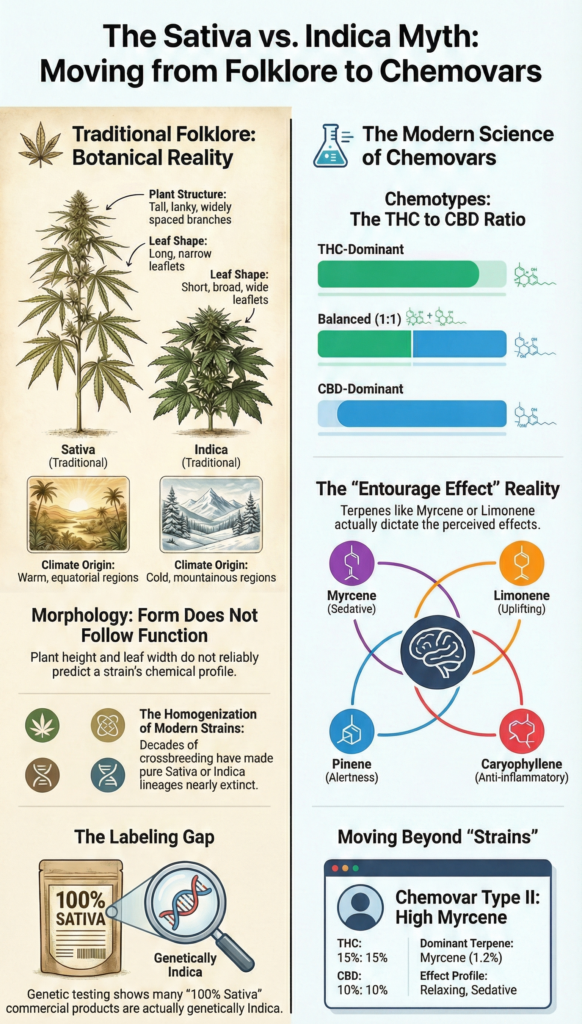
The confusion dates back to the 18th century, long before anyone was analyzing terpene profiles. In 1753, Carl Linnaeus classified Cannabis sativa as a tall, fibrous plant from Europe, primarily used for hemp and rope.
Decades later, in 1785, Jean-Baptiste Lamarck identified Cannabis indica as a shorter, bushier variety from India, cultivated for its psychoactive resin.
These terms were created to describe the physical architecture of the plant—its morphology—not its chemical content or medical potential.
Over the last century, however, the vernacular shifted. We began using botanical terms to describe experiential effects. We assumed that because a plant looked a certain way, it would feel a certain way.
Science has since proven that a plant’s height or leaf width has absolutely no correlation with its biochemical makeup.
The Genetic Blur
Even if those historical distinctions once held water, human intervention has largely erased them.
Centuries of clandestine cultivation, cross-breeding, and hybridization have homogenized the cannabis gene pool.
Today, nearly every strain on the commercial market is a hybrid of ancestral pools.
Genomic studies underscore this reality, repeatedly failing to find clear genetic clusters that align with the labels found on dispensary shelves. In fact, genetic testing reveals that samples labeled “Indica” are often genetically indistinguishable from those labeled “Sativa.”
On top of this, as you may know, because strain names are unregulated, the “OG Kush” you buy in one city may be genetically unrelated to the “OG Kush” sold in another.
The Chemistry of Experience
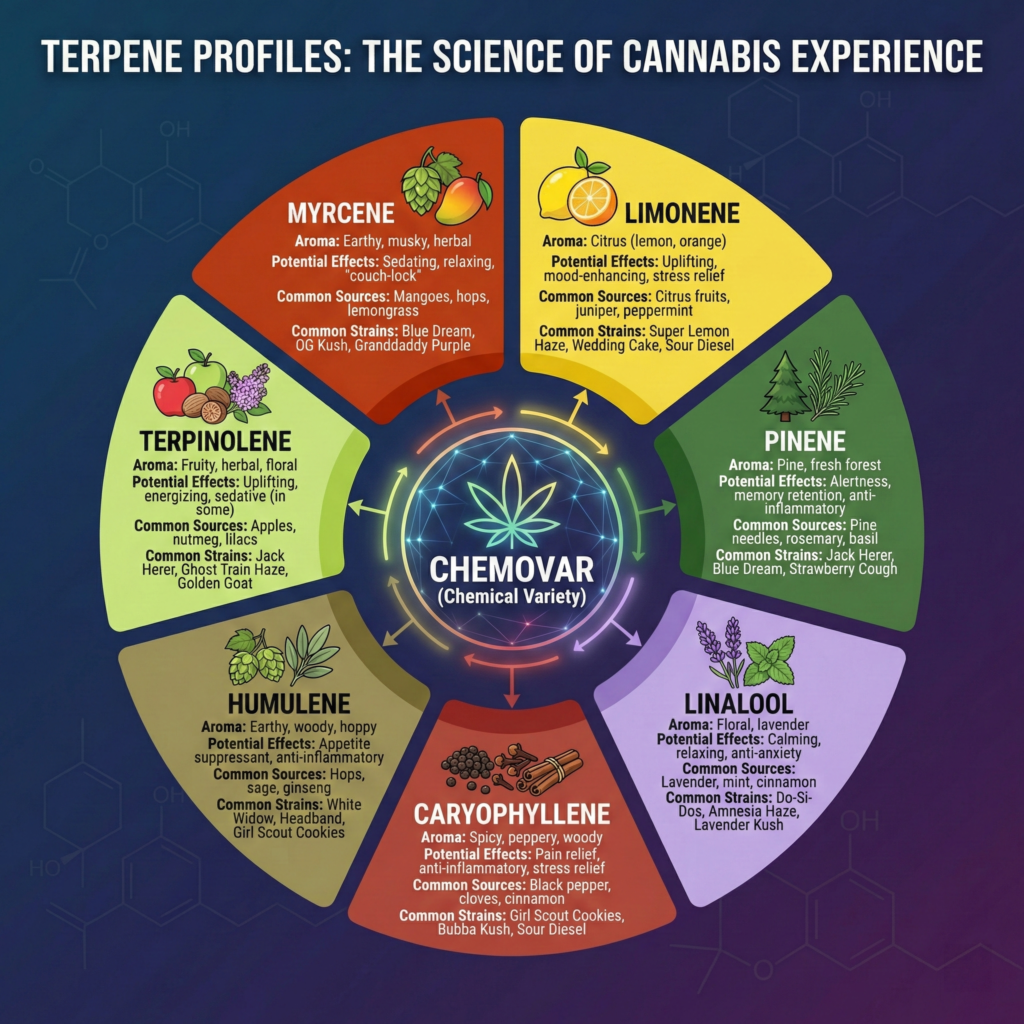
Ultimately, the effects of cannabis are not driven by the shape of the leaf, but by the “chemovar”—the specific chemical variety. The experience is dictated by the synergy between cannabinoids (like THC and CBD) and terpenes (aromatic compounds).
This is known as the “entourage effect.”
Large-scale chemical mapping shows that the commercial labels fail to predict this chemistry. A strain labeled “Sativa” can easily have a terpene profile dominated by myrcene, a compound associated with sedation.
Conversely, an “Indica” might be rich in limonene, which is often associated with alertness.
The Path Forward
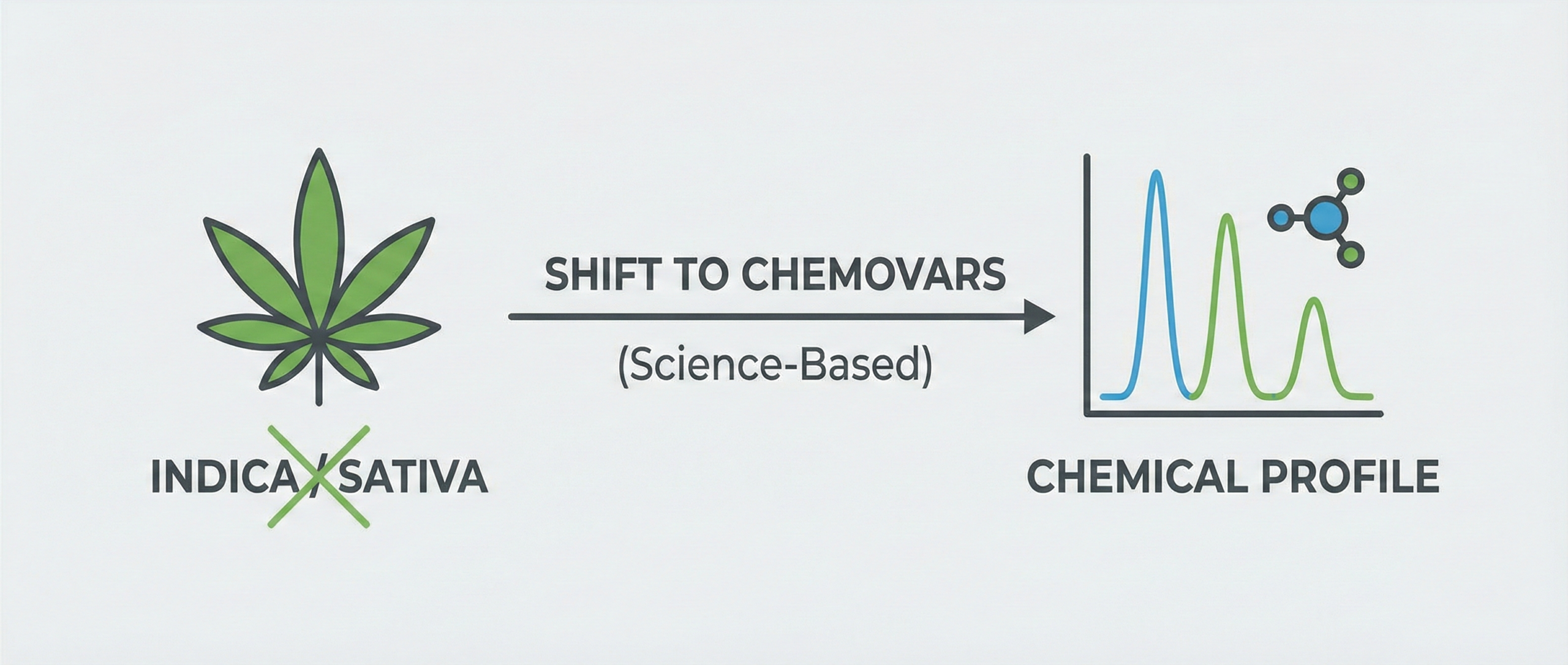
The binary system persists because it is convenient, not because it is accurate. Researchers are now urging the industry to abandon these archaic labels in favor of a “Chemovar” system.
This approach categorizes cannabis based on its metabolomic profile—specifically quantifying cannabinoids (Type I, II, or III) and dominant terpenes.
By shifting the focus from folklore to chemistry, consumers can finally make informed decisions based on what is actually inside the plant, rather than the name on the jar.