
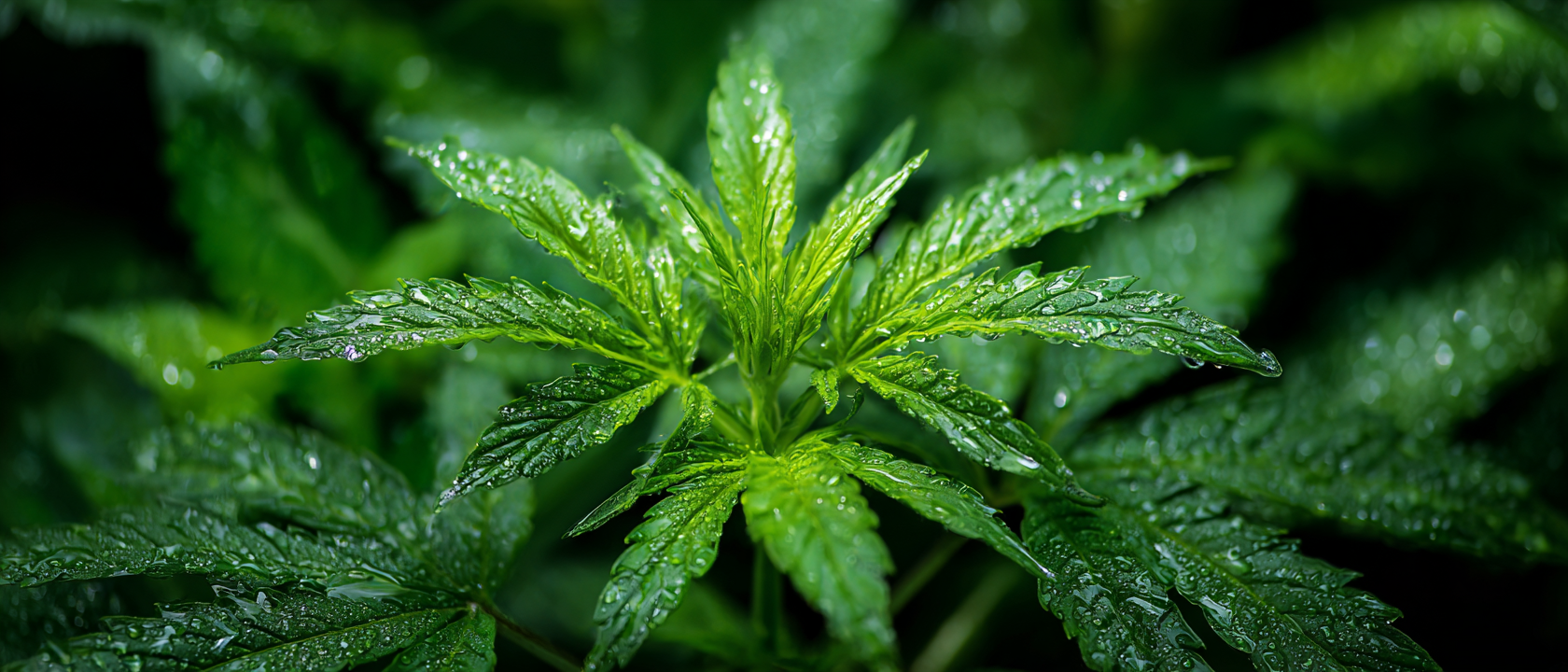
Most living things play the chromosome game in pairs. Humans have two sets. Dogs have two sets. The humble cannabis plant? Two sets. It’s biology’s favourite arrangement, and it’s worked just fine for millions of years.
But what if you gave a cannabis plant three sets of chromosomes instead of two? What would happen?
Magic, basically. Welcome to the world of triploid cannabis seeds — one of the most genuinely exciting breakthroughs in the history of cannabis cultivation, and something that every grower, from first-timer to seasoned professional, needs to know about.
First, a Quick Crash Course in Plant Genetics (We Promise It’s Fun)
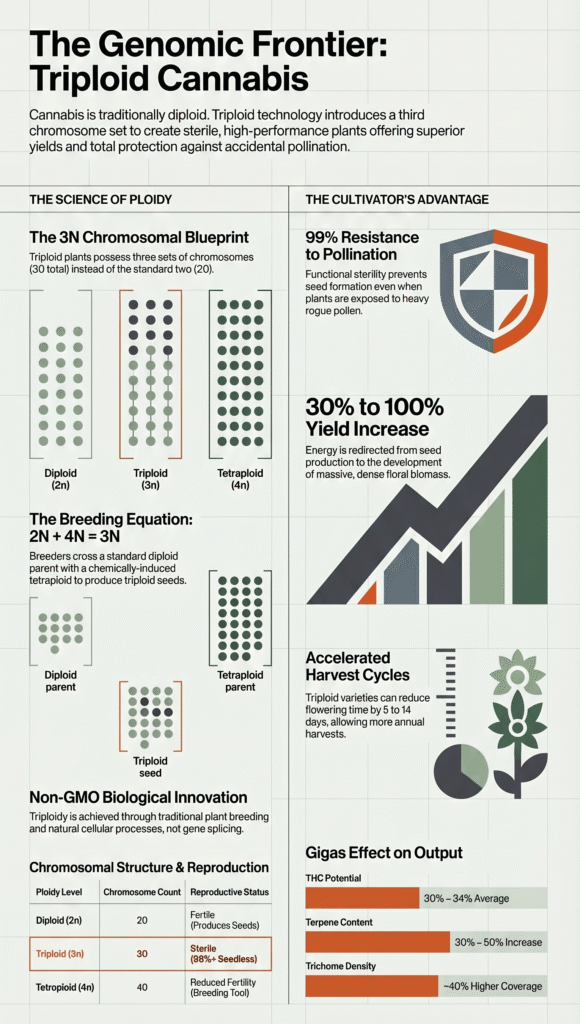
Regular cannabis plants are diploid, meaning they carry two copies of each chromosome — one from mum, one from dad. This is standard biological operating procedure.
Triploid plants have three copies of each chromosome. This extra set is introduced through a carefully controlled breeding technique involving a chemical called colchicine, which causes a plant’s chromosomes to double during cell division. When breeders cross this tetraploid (four-chromosome) plant with a standard diploid, the offspring land at three — and a triploid is born.
It sounds like science fiction. It’s actually just science — and the results are extraordinary.
Seedless Wonders: The Real Triploid Superpower
Here’s the headline benefit: triploid cannabis plants are essentially sterile. That odd number of chromosomes means they can’t pair up properly during reproduction, making seed formation nearly impossible even if pollen is present.
Why does that matter? Because seeds are the enemy of quality cannabis.
When a female plant gets pollinated, she redirects her energy away from producing resin-drenched flowers and into making seeds. The buds get smaller, the cannabinoid content drops, and all those trichomes — those gorgeous frosty crystals packed with THC, CBD, terpenes, and everything else you love about cannabis — suffer. Growers have been fighting this battle forever, doing everything possible to keep male plants away from females.
Triploids solve this problem at the genetic level. No seeds. Guaranteed. Not because you worked hard to prevent pollination, but because the plant is biologically incapable of producing them. The result? Bigger, denser, resinous flowers with maximum potency and flavour, every single time.
This is why seedless grapes exist. Same technology, same principle — just applied to one of the world’s most popular plants.
More Plant, More Yield
Triploids don’t just avoid seeds — they actively outperform their diploid counterparts in some genuinely impressive ways.
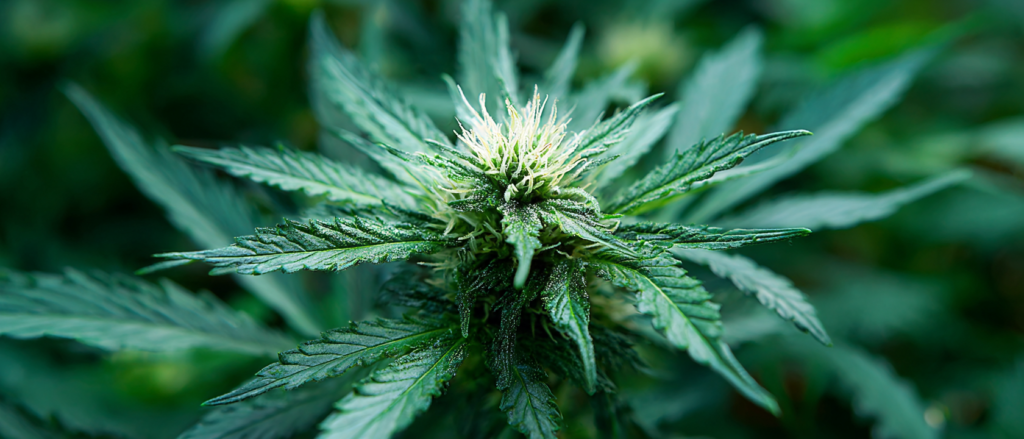
Because of the extra genetic material, triploid cannabis plants often display what breeders call vigour. They tend to grow faster, develop more robust root systems, and produce notably higher yields. The flowers themselves are frequently larger and heavier than you’d see from a conventional equivalent. In commercial cultivation, this can translate to significantly higher output from the same space, the same lights, and the same nutrients.
For the home grower, it means more reward for the same amount of effort. That’s a very good deal.
Consistent Quality, Every Grow
One of the great frustrations of cannabis cultivation has always been variability. Even from the same batch of regular seeds, individual plants can turn out quite differently — different heights, different flavour profiles, different harvest windows. It keeps growers on their toes, but it also makes planning difficult.
Triploid seeds, particularly those developed within F1 hybrid programmes, bring remarkable consistency. Because the genetics are so carefully controlled, what you see on the packet is almost exactly what you get in the tent. Same structure. Same flowering time. Same terpene expression. Same potency.
For commercial operations, this consistency is worth its weight in gold. For hobbyist growers who’ve ever been burned by surprise male plants or disappointing harvests, it’s simply a relief.
Are They Hard to Grow?
Absolutely not — and this is one of the best things about triploid seeds. Despite the sophisticated science behind them, these plants don’t require any special treatment. They go in the ground (or the pot, or the rockwool cube) just like any other seed. They respond to light, nutrients, and water in the same ways. They don’t need special equipment, specialist knowledge, or any kind of exotic care regime.
The magic is entirely in the genetics. You just grow them, and the plant does the rest.
That said, because they’re sterile, you can’t breed with them. Triploids are a one-way street — you grow the plant, you harvest the flowers, and that’s the end of the genetic line. You’ll need to buy fresh seeds for your next run. For most growers, that’s a completely reasonable trade-off for everything you get in return.
A New Era for Cannabis Cultivation
Triploid cannabis technology has been in development for years, but it’s only now becoming widely accessible through specialist seed companies investing seriously in the science. We’re at the beginning of what promises to be a genuine revolution in how cannabis is bred and grown.
The implications stretch beyond just yield and quality. As cannabis cultivation becomes more regulated and professionalised around the world, the ability to deliver reliable, consistent, seedless, high-performance crops is going to become the industry standard. Triploids are leading that charge.
The Bottom Line
Triploid cannabis seeds represent a genuine leap forward — not a marketing gimmick, not a trend, but a scientifically grounded innovation with real, tangible benefits for real growers. More resin. More yield. Zero seeds. Maximum consistency.
Whether you’re growing commercially at scale or nurturing a few plants under a lamp in a spare room, triploid seeds give you something every grower wants: the best possible outcome from every single seed. The science is fascinating, the plants are extraordinary, and the era of the triploid is very much underway.
Three sets of chromosomes. One exceptional plant.